RED-CMF-S
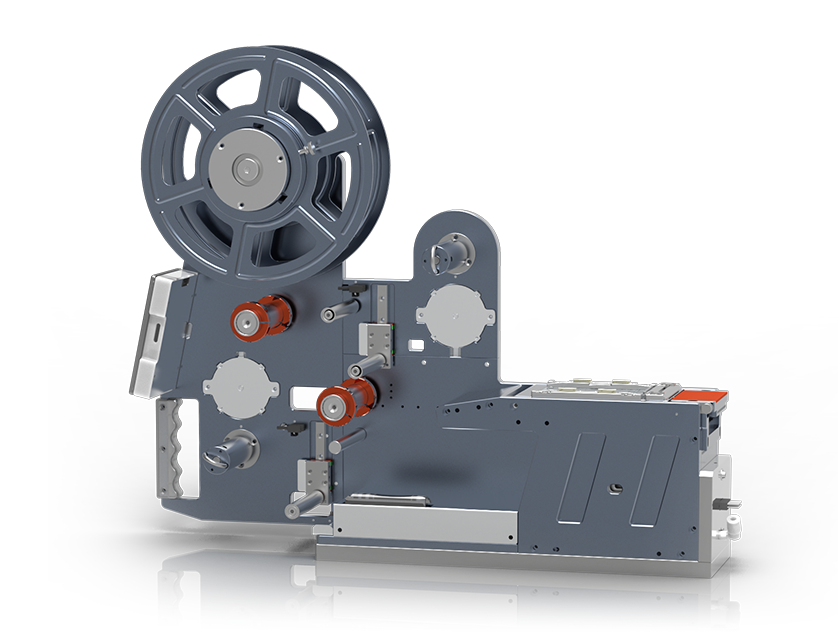
Short Feeder
More beautiful layout inside the device
Main products — providing comprehensive feeder solutions
Short Feeder
More beautiful layout inside the device
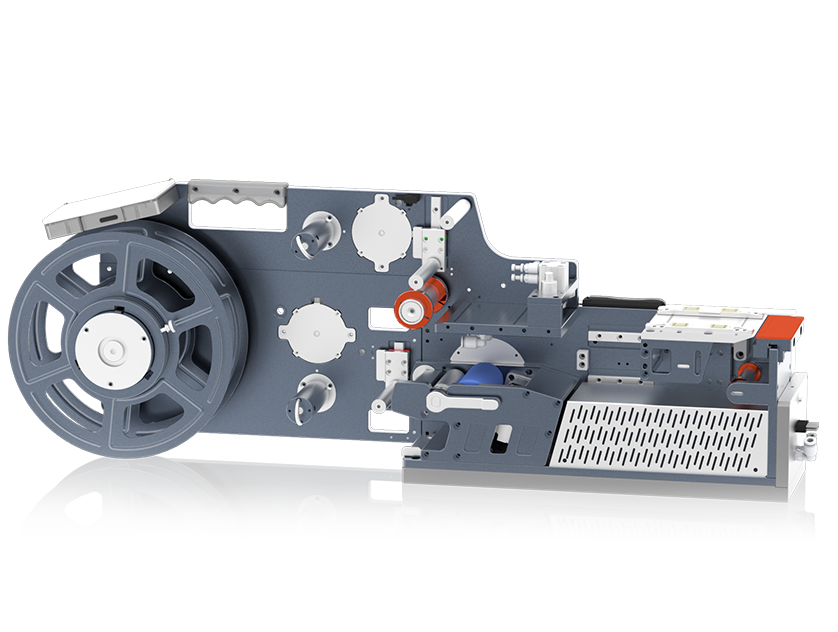
Long Feeder
Easier line change with material outside the machine
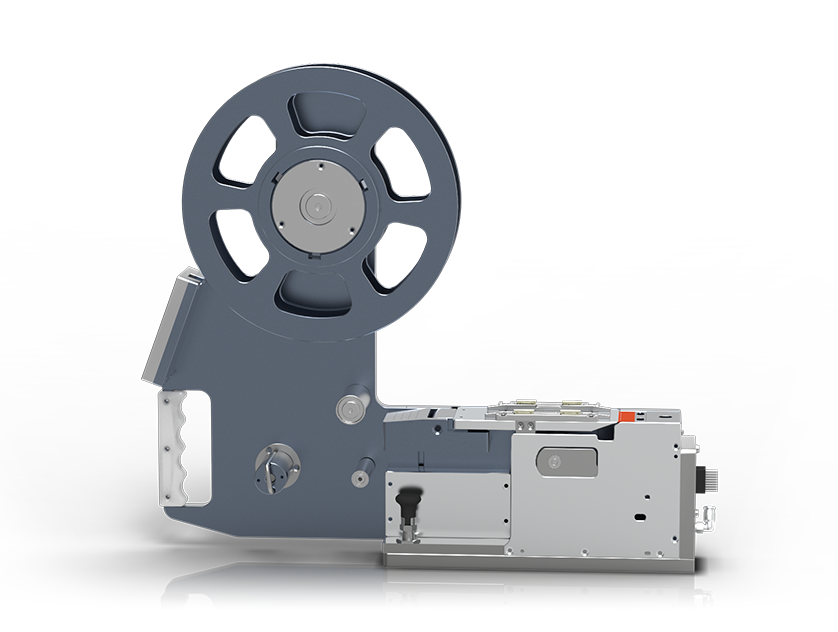
Compact Short Feeder
More layouts in limited space
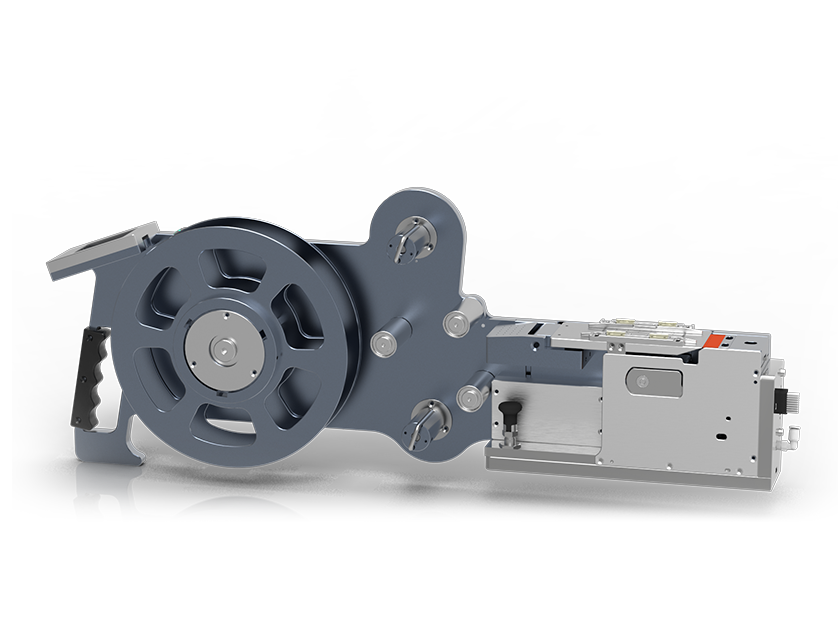
Compact Long Feeder
More layouts in limited space
Front-Push Lift Custom Model
For die-cut materials with no gaps and strong adhesion
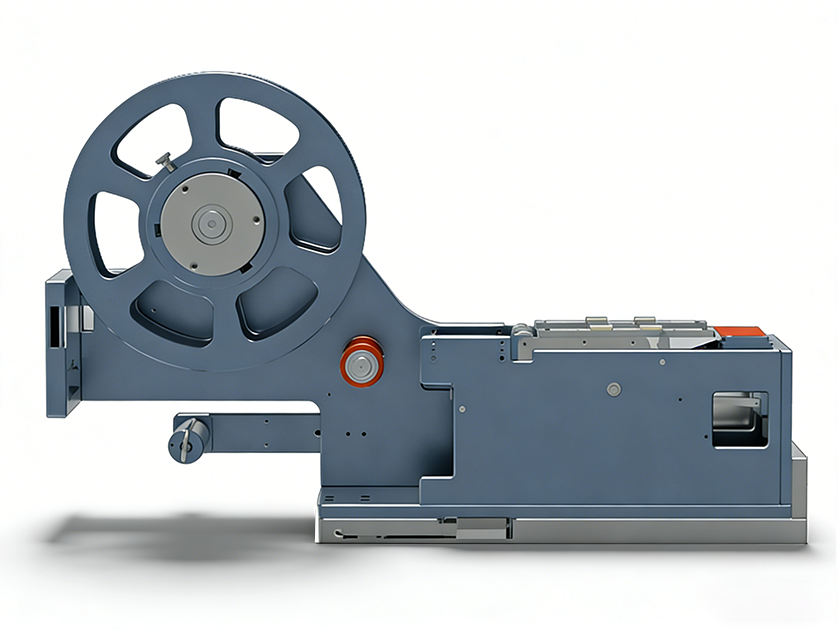
Easy-Peel Label Feeder
For easily peelable label materials
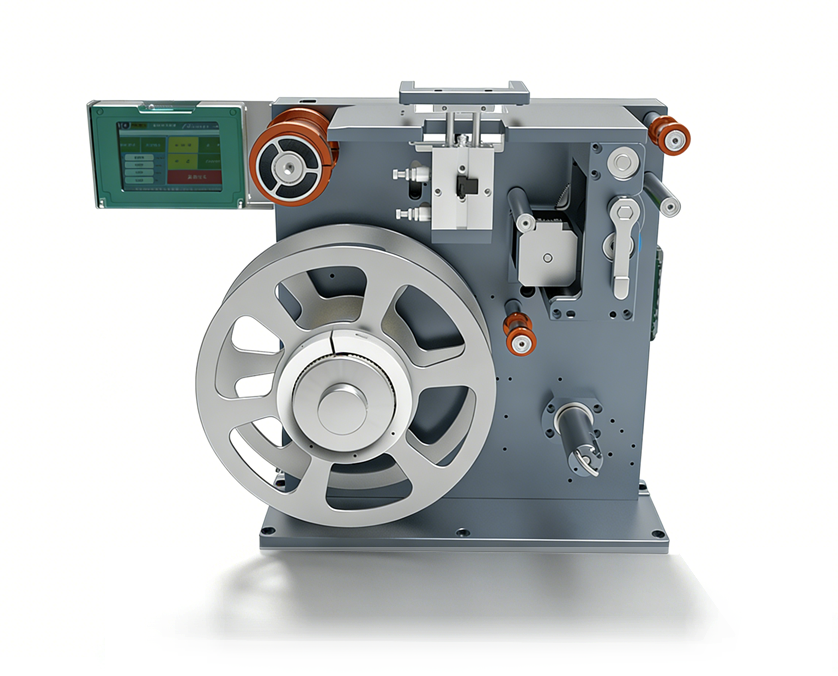
The peel-first-then-pick mode can peel multiple rows of materials at once, with fast action and high efficiency, simple structure and easy operation, and obvious relative cost advantages.
The material is pushed to the non-stick platform by release force while being disturbed by friction in the opposite direction, so some materials may deviate in feeding position.
1. Base paper width
2. Roll inner/outer diameter
3. Whether there is a top cover film
4. Single piece size and arrangement
• Material and bottom film reverse-fold test should peel easily without obvious adhesive bleeding.
• Base paper preferably PET material without elasticity, 0.05mm thickness is optimal;
• Base paper without knife marks, otherwise tearing or delamination may occur during peeling;
• Base paper without joints, with 50cm blank tape reserved at both ends. The distance from material to edge must be no less than 5mm, and a gap of more than 2mm is required around each single piece.
Short Feeder
More beautiful layout inside the device

Long Feeder
Easier line change with material outside the machine
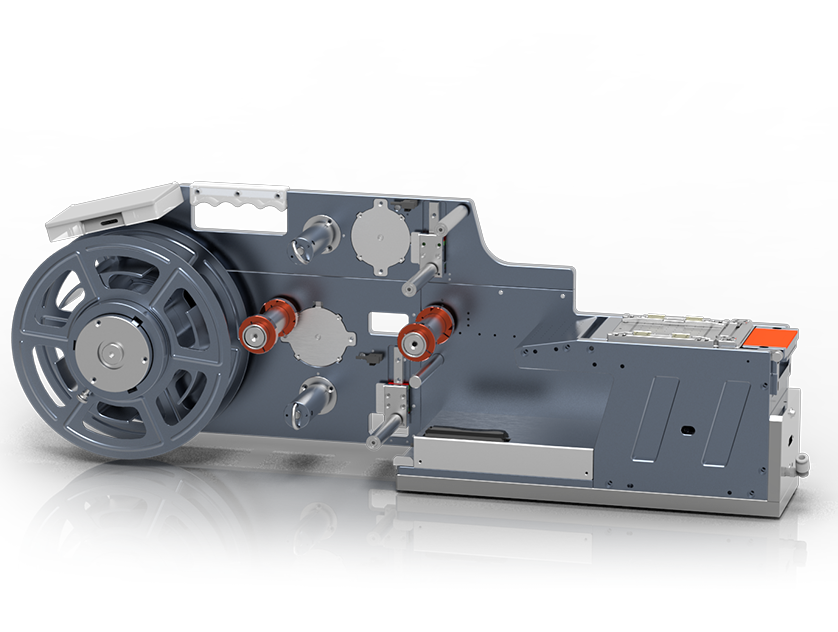
Large Rear-Pull Feeder
High-precision material positioning

Ultra-Wide Rear-Pull Feeder
Large-Capacity Material Handling

S280-L-C1-A171-01-V1.0
Suction first, then peel
Built-in labeling mechanism

The pick-first-then-peel mode delivers high output precision and works well for materials that are hard to peel or tend to shift or wrinkle after peeling. Meanwhile, the rear-pull feeder also has front-push feeder functions, enabling one machine for multiple uses.
Because the rear-pull feeder picks first and then peels, the suction cup briefly stays on the feeder during peeling while the blade retreats to peel the material. The suction cup dwell time is approximately ≤1s.
1. Base paper width
2. Roll inner/outer diameter
3. Whether there is a top cover film
4. Single piece size and arrangement
• Material and bottom film reverse-fold test should peel easily without obvious adhesive bleeding.
• Base paper preferably PET material without elasticity, 0.05mm thickness is optimal;
• Base paper without knife marks, otherwise tearing or delamination may occur during peeling;
• Base paper without joints, with 50cm blank tape reserved at both ends. The distance from material to edge must be no less than 5mm, and a gap of more than 2mm is required around each single piece;
100-S1-ST-048-R-V1.0
Standard Sheet Material
Compatible with most sheet materials

100-S2-ST-048-R-V1.1
Rear-Pull Sheet Material
Customized for Special Materials

100-S3-ST-048-R-V1.2
Top-Film Peeling Sheet
For materials with top cover film

100-S4-ST-048-R-V1.3
Bottom-Film Peeling Sheet
Customized for Special Materials

【Standard sheet feeder】consists of three parts: the magazine, the loading module and the label peeling head. The loading module uses a suction cup to lift the sheet from the magazine and place it on the peeling head. The peeling head is designed with a pressing structure, peeling blade, receiving platform and traction structure. The pressing structure holds the tail of the bottom film, the platform structure bends the head of the bottom film downward, and then the traction structure engages the bottom film. The traction structure moves synchronously with the pressing mechanism to pull the bottom film, peeling the material through the bending at the peeling blade and pushing it onto the receiving platform.
【Film-peeling sheet feeder】is designed with a magazine, peeling gripper, receiving platform and transfer module. The transfer module takes a sheet from the magazine and moves it to the peeling position; the gripper holds the bottom film, bends it downward and retreats, then the transfer module moves the material to the right while the gripper tears off the bottom film. The transfer module continues moving right and places the film-free material onto the receiving platform.
Wide application range, can handle sheets of various materials and thicknesses, with high feeding precision.
Relatively high requirements for material and product adaptability, with relatively complex commissioning.
1. Base paper material, width and length
2. Size and arrangement of a single piece
3. Material and characteristics of the material
4. Whether there is a top cover film
• Bottom film base paper within 200 width and 300 length, overall flat, with certain tensile strength (5kg/50mm width);
• A single piece must not be smaller than 3mm; the center-to-center spacing is recommended to be unified at 5mm or its multiples.
• Reserve 25mm or more blank at both head and tail of the bottom film for fixing and traction, and 10mm or more on left and right sides to avoid the suction cups of the transfer module.
100S300-L-C1-V1.0
Front-Peel Roller Lamination Feeder
Attach with adhesive side down onto the product surface

130-HSD-010-L-V2.0
Special Roller Lamination Feeder
Roller lamination for large-diameter rolls

100-LL200-S1-L-V2.0
Reverse-Peel Roller Lamination Feeder
Attach with adhesive side down onto the product surface

012S200-L-C1-V1.1
Inline Roller Lamination Cutting
Mainly used for 3M double-sided tape roller lamination then cutting

Rear-pull roller lamination feeder: the label is peeled using the rear-pull method, the blade retreats and the roller presses down to attach the label to the product.
Reverse-peel roller lamination feeder: depending on whether the product attaches to the front or back side, we divide the feeder into forward roller lamination or reverse roller lamination.
Inline roller lamination feeder: when the product reaches directly below the roller, the roller presses down and the product or the feeder moves until the material is fully peeled, then the feeder returns.
Uniform roller lamination pressure, good attachment effect, suitable for continuous production with high efficiency.
Relatively high requirements for material and product adaptability, with relatively complex commissioning.
1. Base paper width
2. Roll inner/outer diameter
3. Whether there is a top cover film
4. Single piece size and arrangement
• Rear-pull roller lamination requires a flat attachment surface; inline roller lamination can accommodate curved products.
• The roll must be single-row. The minimum size of a single label is 20x20mm.
60-51-BZ-028-L-V4.0
Standard Cutting Feeder
High-precision variable-length cutting

40S300-L170-L-C1-V2.0
Single-Sided Tape Cutting Feeder
Model with Bottom Film Recycling

040S185-L050-R-C2-V2.0
Special Material Cutting
Fast pull-out with precise fixed-length cutting

060XP-L0220-W0220-V4.0
Solder Sheet Cutting Feeder
Dedicated for IGBT solder sheet (solder band) cutting

High cutting precision, adjustable length, applicable to multiple materials, with a high degree of automation.
Relatively high requirements for material flatness and stability; the cutter requires regular maintenance.
1. Cutting length
2. Cutting precision (±0.5mm)
3. Material thickness
4. Cutting speed
5. Whether the incoming material is single-sided or double-sided tape
• The material has good cutting performance;
• Uniform material thickness without variation;
• Material without joints and neatly wound;
• The tape should not easily deform elastically during the pulling process.
• Tape width 3-40mm. Tape cutting length 15-250mm.
• The cutting edge is neat without stringing;
Applicable label length:15-30mm
Inline Print & Transfer Label Feeder
Robotic arm transfers printed labels

Applicable label length:15-60mm
Inline Print & Roller Label Feeder
Fast batch printing followed by roller lamination

Applicable label length:15-120mm
Inline Print Label Feeder
Vertical labeling after printing

Applicable label length:15-120mm
Multi-Side Labeling Printer
For attaching to side and top surfaces

Applicable label length:15-160mm
Inline Print & Rear-Pull Label Feeder
Print onto the platform, hold the label with suction, then rear-peel

Print content is programmable, information updates in real time, with high print quality and good integration.
Limited adaptability to printing materials and environment, with relatively high maintenance costs.
1. Print size
2. Print speed
3. Print content
4. Label material
• Label material suitable for thermal transfer or thermal printing;
• The printing surface is flat without unevenness;
• Label size is stable without expansion or contraction;
• Suitable temperature and humidity of the printing environment;
For 8mm carrier tape materials

For 12-88mm carrier tape materials

适配YAMAHA YS/YSM系列贴片机
Compatible with standard tape feeding

适配HANWHA三星SM系列贴片机
Compatible with standard tape feeding

适配JUKI KE/RS系列贴片机
Compatible with standard tape feeding

High feeding precision, suitable for SMT production lines, good compatibility and high efficiency.
Strict requirements on tape specifications; not suitable for non-standard tape materials.
1. Tape width
2. Component pitch
3. Feeding speed
4. Tape specification
• Components are accurately positioned in the tape;
• Tape without deformation or damage;
• Tape width conforms to SMT standards: 08,12,16,24,32,44,56,72,88 (mm);
Heat Sealing Feeder
Heat-seals the carrier tape cover film

Tape Rewind Feeder
Recycles cover film and waste carrier tape

High sealing precision and accurate positioning, suitable for high-precision sealing requirements.
Complex equipment with high cost and high requirements on environment and operators.
1. Sealing size
2. Positioning precision
3. Sealing force
4. Environmental requirements
• Sealed material has high dimensional precision;
• The sealing environment meets cleanliness standards;
• Operators are highly skilled;
• Sealing material quality is stable;
ARD-RX150D-B1
Precision Flexible Feeder
Flexible handling of fine materials

ARD-XR500D-B1-3L
Heavy-load Flexible Feeder
Large-Capacity Flexible Adaptation

Wide application range, can handle parts of various shapes, high automation and good flexibility.
Certain requirements on part surface and weight, with relatively slow processing speed.
1. Product size, number of products that can be accommodated
2. Vibration effect, number of products that can be picked
3. Touchscreen installation position
4. Installation and interference requirements
5. Light source requirements
• Thin products (such as 0.1mm thin sheets) easily stick to the bottom of the tray, so the tray needs to be customized
• Irregular-shaped products cannot stand steadily, so a customized tray is required.
• When two vibratory feeders are close to each other, our vibration isolation solution can be used to avoid mutual interference during vibration.
• Part material is suitable for vibration conveying;
适配YAMAHA YS/YSM系列贴片机
贴片机直接取贴标签

适配HANWHA三星SM系列贴片机
贴片机直接取贴标签

适配JUKI KE/RS系列贴片机
贴片机直接取贴标签

适配FUJI NXT系列贴片机
贴片机直接取贴标签

适配PANASONIC NPM系列贴片机
贴片机直接取贴标签

无需额外贴标工位和设备,利用贴片机原有产能直接贴标,精度高、节拍快,与SMT产线无缝集成。
需要按贴片机品牌和型号选择对应的供料器规格,标签尺寸受贴片机吸嘴和程序限制。
1、贴片机品牌和型号
2、标签尺寸
3、底纸宽度
4、标签间距与排列
• 标签来料为卷式且底纸无接头;
• 标签间距与飞达步进规格匹配;
• 标签尺寸在贴片机吸嘴可拾取范围内;
Automatic loading for tray-packed components

Independent pockets isolate each component for excellent protection without squeezing or damage; customizable cavities fit irregular large parts; stable pick-up positions deliver a low rejection rate; flexible changeover suits high-mix production; ESD-safe trays are reusable; positioning repeatability reaches ±0.03mm.
Feed cycle is slower than tape feeders with a lower capacity ceiling; multi-stack units occupy more floor space; single-layer units require manual tray changes; non-standard trays need mold tooling; program setup involves more workload.
1. Component L×W×H and unit weight
2. Lead pitch and coplanarity requirements
3. Tray outline size (standard JEDEC 230×335mm)
4. Pocket size, depth and matrix pitch
5. Stacker capacity (layers) and positioning repeatability
6. Drive type, air supply and communication ports (GPIO/TCP-IP)
• XY repeatability ≥ ±0.03mm with no tray displacement during picking
• Tray surface resistance 10⁴-10¹¹Ω (dissipative) with reliably grounded frame
• Compliance with the ANSI-ESD S20.20 standard
• Empty-tray warning and component-out detection
• Pocket-skip function and multiple tray recipes for quick changeover
Delta Parallel Spider Robot
Tray arranging · Precision assembly · Fully automatic random feeding

Integrated vision and control with code-free one-touch changeover; flexible installation as a standalone or in-line machine; EtherCAT high-speed servos with motion tracking greatly boost throughput; compatible with major equipment signals; combines tray arranging, tracking and labeling in one to save stations; voice-coil flexible vibration plus dual-vision positioning protects precision parts from surface damage.
Higher initial investment than traditional vibratory bowls; highly reflective or transparent parts require a custom vision solution; the D600 has a large footprint (420×690×930mm); the bottom camera is an optional add-on (5MP).
1. Model selection (D300/D400/D600)
2. XY/Z stroke (mm)
3. Maximum payload (kg)
4. Maximum part size (mm)
5. Machine dimensions (mm) / weight (kg)
6. Repeat positioning accuracy ±0.15mm
7. Camera configuration (V1 single vision / V2 dual vision)
8. Harmonic reducer / communication protocol (EtherCAT / IO)
• Part size ≤ 30mm (customization required beyond this);
• No highly reflective / fully transparent part surfaces (custom vision required otherwise);
• Installation bench load capacity ≥ machine weight (D300: 25kg / D400: 30kg / D600: 50kg);
• Stable AC220V power supply;
• Reserved EtherCAT / IO communication ports;
• Workshop ambient temperature 10-40°C.


